Collaborative Solutions in the Field Reduce Costs
March 11, 2026 | Midwest
The Lower Gar Bridge replacement project near Milford, Iowa, presented local officials and utility partners with a unique set of challenges and an opportunity to demonstrate collaboration, innovation and cost‑effective problem solving. What began as a routine bridge construction project quickly evolved into a coordinated effort to protect customer value, maintain reliability and avoid unnecessary expenses for both ITC Midwest and the community.
A project that shifted midstream
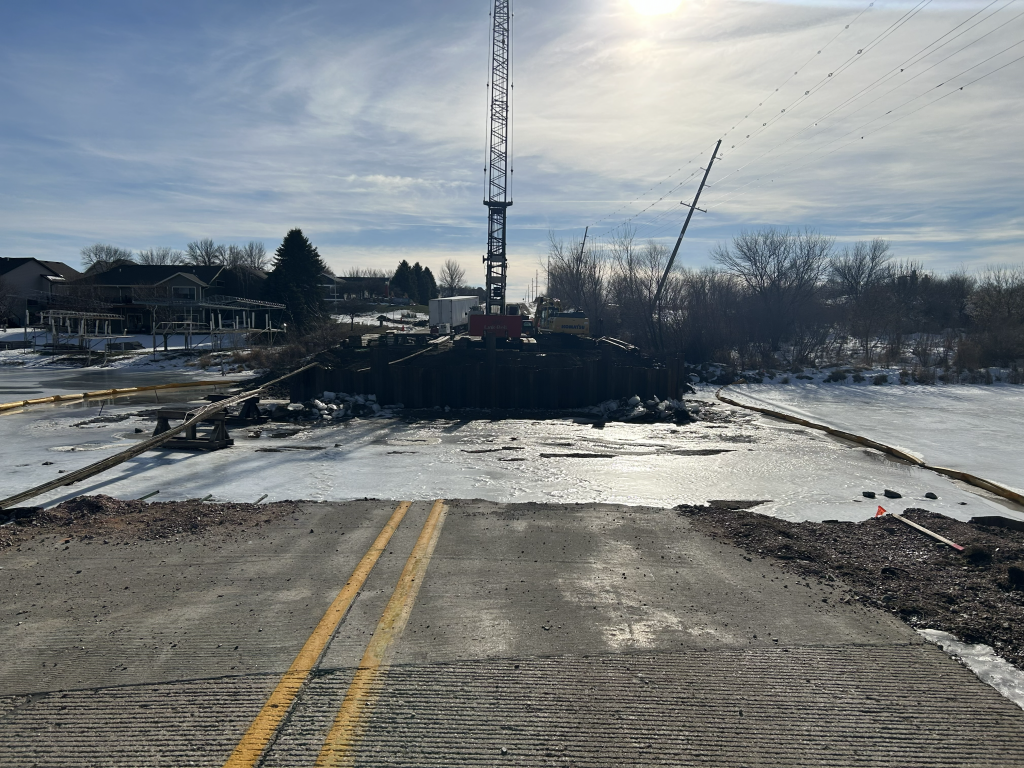
The county’s original objective was straightforward: remove a series of aging box culverts under the roadway and replace them with a single, modern bridge structure. Early assessments showed no anticipated utility conflicts, and initial planning reflected that optimism. ITC Midwest Local Government and Community Affairs Area Manager Mike Frank and ITC Midwest Permitting Manager Mark Rothfork attended the pre-construction meeting alongside county leaders, contractors and other utilities. But shortly after, the picture changed. During an onsite review, Graves Construction requested that ITC Midwest relocate its 69kV transmission line outside of the right‑of‑way for the duration of construction.
Based on his experience with similar bridge projects, Mike believed full relocation wasn’t necessary. The bridge footprint and construction layout didn’t appear to require such an extensive move. Through further discussions with Graves Construction, the parties reached a smarter, more efficient solution: temporarily leaning the pole line outward while keeping the line de-energized during work.
Innovative, cost-saving approach
Choosing to lean the poles rather than fully relocate them delivered major benefits, including:
- Avoided thousands in cost and complexity of relocating poles onto Department of Natural Resources (DNR) property and moving them back once the bridge was complete.
- Reduced construction impacts, keeping the project on schedule and maintaining service reliability with the lines being re-energized when bridge work was not taking place.
- Mark worked closely with the DNR to ensure the temporary structure change didn’t encroach on protected sovereign lands to avoid further permitting requirements and potential delays.
An additional cost savings became relevant asITC Midwest Field Supervisor Nate Frein worked to overcome another unexpected challenge. ITC Midwest’s utility infrastructure included an underground fiberoptic line located in the roadway shoulder, with initial estimates for relocating and splicing the fiber adding significant, unexpected costs. Working collaboratively, Nate contacted the boring contractor, who agreed to bore ITC Midwest’s fiber conduit for a fraction of the cost, keeping the project on budget and schedule. They completed the bore alongside several other conduit installations, improving efficiency and minimizing disruption.
Progress on the bridge project
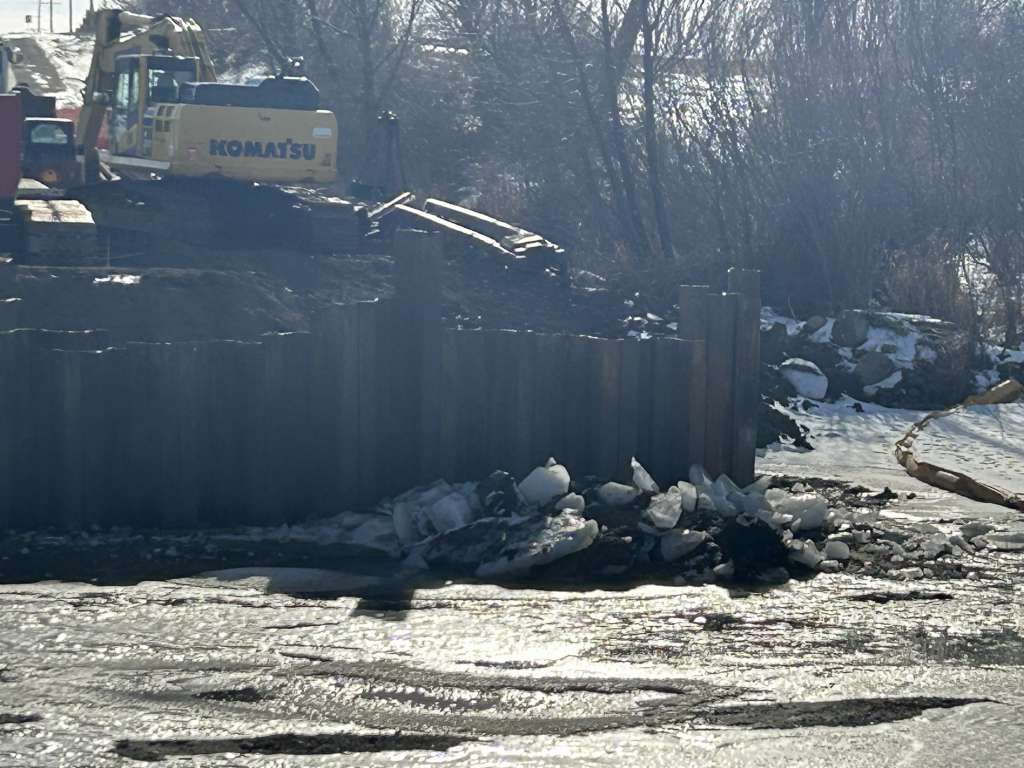
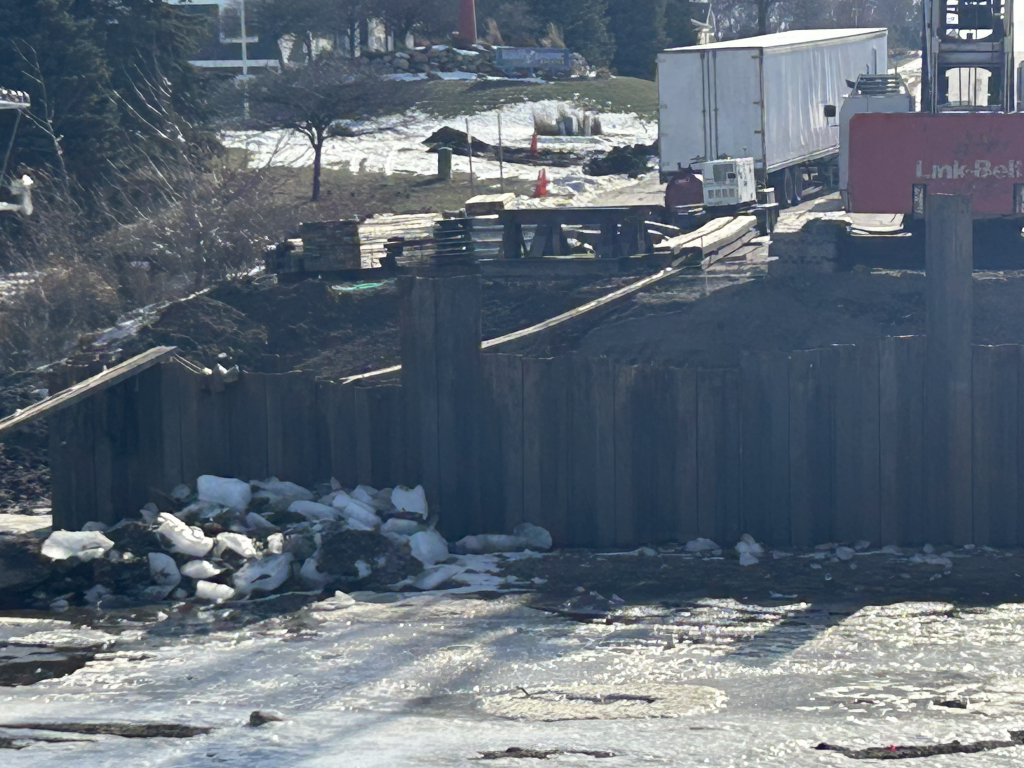
With utility conflicts resolved, construction moved forward and the existing culverts were removed. A coffer dam constructed from vertical steel sheets with interlocking tongue-and‑groove connections was installed. These structures typically range from 40 to 60 feet in height and allow water to be pumped out so bridge piers and abutments can be installed.
In the coming months, the contractor will begin the bridge deck portion of the project. Once complete, ITC Midwest will lean the poles back to their original positions, restoring the permanent configuration. Full project completion is expected in spring 2026.
A model of collaboration and customer value
This project highlights how proactive problem‑solving and cross‑team collaboration can translate directly into customer value and affordability. By challenging initial assumptions, engaging partners early and exploring alternatives, ITC Midwest avoided costly relocations, protected natural lands and kept the project moving efficiently.
The Lower Gar Bridge replacement stands as an example of how thoughtful planning and teamwork benefit both the community and the customers we serve.