
Our Commitment to Environmental Stewardship
December 18, 2025 | Midwest
At ITC Midwest, we are committed to protecting wildlife, including birds, across our electric transmission system. While rare, interactions between birds and electrical infrastructure such as power lines or substations can pose risks.
We actively work to reduce these risks through a variety of mitigation strategies and collaboration with environmental experts. Our goal is to minimize harm while maintaining safe and reliable electric service.
Use of bird diverters to mitigate collisions
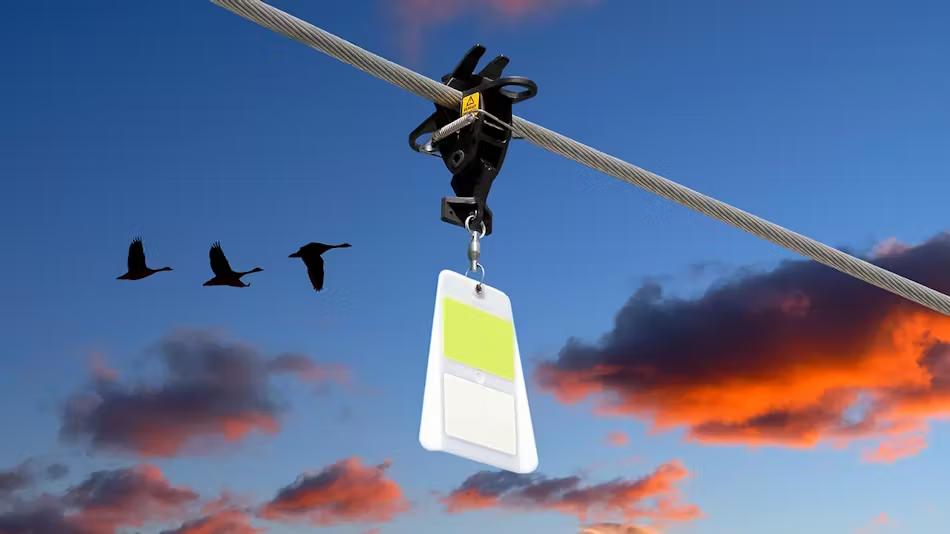
Bird diverters are simple but effective tools used by ITC Midwest to make power lines more visible to birds in flight. FireFly bird diverters, recommended by the U.S. Fish and Wildlife Service, are proven to be highly effective at helping birds avoid power lines. These diverters use movement, reflection and a glowing light to catch birds’ attention, especially in areas with strong, steady winds, making it easier for birds to see and avoid overhead lines.
“ITC Midwest’s proactive approach to bird mitigation—especially its use of swan flight diverters and collaborative planning—has made a real difference on the ground. We’re seeing positive results, highlighting ITC’s efforts as a model for conservation partnerships in Iowa.”
Anna Buckardt Thomas
Avian Ecologist
Iowa Department of Natural Resources
Avian protection plan (AAP)
ITC Midwest has a voluntary Avian Protection Plan (APP) to help protect birds around its transmission lines and equipment. The plan’s main goals are to reduce risks to bird species and keep the electric system running smoothly. It follows best practices and guidelines developed by experts, including the Avian Power Line Interaction Committee, the U.S. Fish and Wildlife Service, and other partners.
ITC Midwest’s Avian Protection Plan (APP) matches the needs of the areas we serve. To guide our efforts, we start with a broad review of our service territory. This includes looking at where protected bird species live, past bird-related outages, and nearby environmental features like lakes, parks and critical habitats. By considering environmental, economic and community factors, we focus our resources where they make the biggest impact for both birds and our customers.
We also follow all federal and state regulations that protect birds and their nests. Our policies align with three major U.S. laws managed by the Fish and Wildlife Service:
- The Migratory Bird Treaty Act
- The Bald and Golden Eagle Protection Act
- The Endangered Species Act
These laws guide how we respond when we encounter protected bird species during our work.